How YMCAs Are Putting AI to Work in Fundraising: 5 Lessons from the NAYDO 2026 Panel
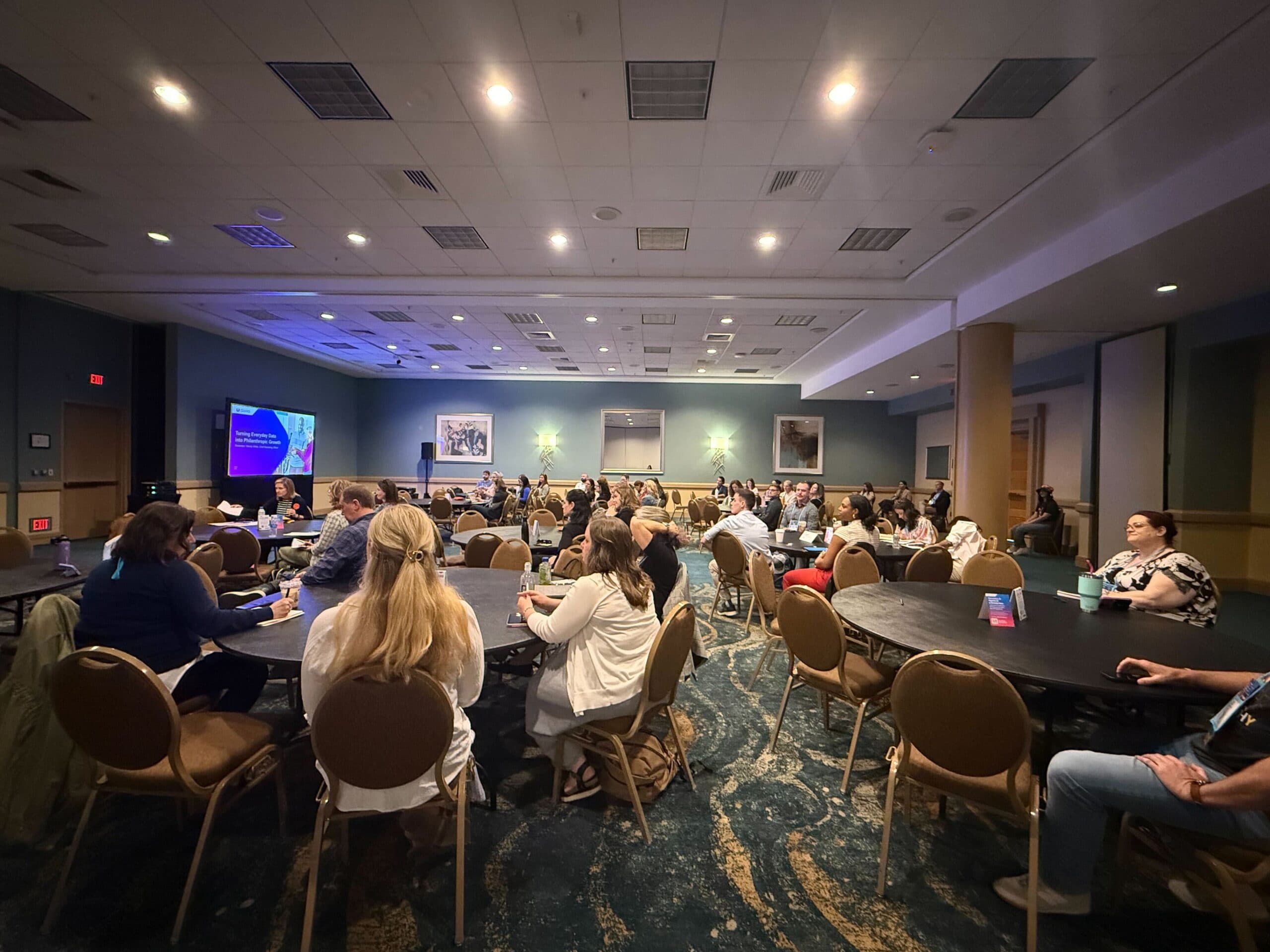
At NAYDO 2026 in Long Beach, two YMCA leaders took the stage to share how they are already putting AI to work in fundraising and operations – and they were generous about exactly what is working, what is not, and how to start.
The panel – Turning Everyday Data into Philanthropy – was moderated by Wendy White, Daxko’s CMO. The speakers were Bill Powell, COO and EVP at the YMCA of Greater Cincinnati, and Laura Arredondo, CMO at the YMCA of Central Texas, joined by Nick Lindauer, VP of Digital Services at Daxko.
What stood out was the practicality of the conversation. No abstract theory. No future-state slides. Two operators describing the work they did between hotel sessions and conference flights, the tools they built, and the results those tools produced. Here are five lessons worth carrying back to your Y.
1. The problem is not data. It's connection.
Nick Lindauer framed it cleanly early in the session, and it set the tone for everything else: most Ys do not have a data problem. They have a connection problem.
We don't have a data problem — we have a connection problem.
Nick Lindauer
VP of Digital Services, Daxko
Every YMCA has plenty of data. Member records, program registrations, donor history, attendance, billing, engagement. The issue is that the data lives in three or more separate platforms that do not talk to each other. The member engagement system. The donor system. The CRM. Each of them holds part of the picture, and none of them holds the whole picture.
The work – before any AI conversation gets useful – is connecting that data into a single profile so every person on the team can see the same picture, knows what has already been said, and knows what to say next.
This was the foundation underneath both Bill’s and Laura’s stories. The AI work followed the data work. Not the other way around.
2. Build pocket coaches for your branch leaders.
Bill Powell shared the most concrete AI-in-production story of the day. Cincinnati is in the middle of a centralization initiative – moving business operations out of branch executives’ hands so those execs can focus on three things: board development, community partnerships, and fundraising. The challenge was consistency. When three different leaders gave three different answers to the same question, branch execs got confused and the centralization lost momentum.
So Bill built a custom GPT agent loaded with the association’s centralization content – policies, procedures, decision rights, escalation paths. Two nights in a hotel, a couple of weeks of testing, and the team had a single source of truth that every branch exec could query from their phone.
He did the same thing for annual campaign strategy and board development. A branch exec four weeks from goal, sitting at $20,000 short, can now ask the campaign agent: build me a strategy to hit goal in four weeks using my board. The agent gives them a step-by-step plan grounded in what has worked across the association.
The results:
branches hit their annual goal last year
branches hit goal this year
average campaign growth across branches
The branch execs who used the tool hit goal earlier and grew their campaigns. The ones who stuck to the old playbook – grinding it out in the last four days – saw the same flat results they had always seen.
Bill was honest that this shift did not happen without resistance. There was real fear in the organization when AI tools first landed – fear of losing jobs, fear of being left behind. His message to his team, borrowed from Mark Cuban, became the framing that helped people lean in instead of pulling back:
You won't lose your job to AI. You'll lose it to someone who knows AI.
Bill Powell
COO and EVP, YMCA of Greater Cincinnati (citing Mark Cuban)
3. Personalize donor outreach by segment - and hold staff accountable to it.
Laura Arredondo’s story started further back. The Y of Central Texas spent more than two decades on a legacy system, running spreadsheets, uploading them into another tool, chasing data that never quite matched. They moved to Daxko, started with a new Daxko website, then moved into Daxko Engage.
With connected data in one place, Laura’s team built automated nurture sequences that segment donors by what they care about. Some people respond to events. Some respond to mission stories. Some respond to outcome data. The messaging is tailored to each group, and the emails work in the background while staff focus on the higher-value conversations.
Two practices stood out as worth borrowing:
Clear ownership over every donor relationship
Laura’s team enforces that multiple staff never contact the same donor at the same time. When someone says, “We need to raise money,” the answer is not five people calling the same person. Ownership is documented in their tools, and everyone follows the plan.
Constant, varied messaging – not just “please donate”
Donors hear from the Y through newsletters, mission moments, video content, event invitations, and outcome updates. The ask is in there, but it is not the only thing in there. By the time the formal solicitation arrives, the relationship has already been reinforced through many other touchpoints. They see it, they read it, they hear it – three reinforcing strategies running in parallel.
We don't have five people targeting the same donor at the same time. We have all of that outlined in our tools.
Laura Arredondo
CMO, YMCA of Central Texas
4. Anyone can learn this. Start with the tool open.
Two years ago at a similar event, Wendy asked the room how many people were using ChatGPT and the answers were mostly some version of “I am scared” or “where do I even find it?” At NAYDO 2026, when she asked the same question, almost every hand in the room went up. AI moved from frontier to familiar in two years, and the people learning fastest are not the technical specialists.
Both Bill and Wendy are self-taught. Bill learned on Instagram reels. Wendy learned on X. Neither has a technical background. Bill said he did not know what “markdown” meant until the panel that afternoon.
Wendy put a finer point on it from her side of the stage: “I am almost sixty, so if I can do it, you guys can do it.” Her routine is no more sophisticated than Bill’s – reading on X on Saturday mornings before gardening, then sitting down at her laptop to play with whatever was just released. That is the whole method. Curiosity plus consistency. No bootcamp required.
The advice was the same from everyone on stage: open the tool. Ask it how to do something. It will tell you. The fear of looking foolish in front of a new technology is the biggest barrier, and the AI does not care that you do not know what you are doing yet.
Bill made one more point worth carrying back to your board. The next generation of staff already lives this way. Their phones, their workflows, their expectations are AI-native. If a Y restricts those staff from using the tools they are already comfortable with, they will leave for the organization down the street that does not. Give them guardrails – SOC 2, PCI, governance, audit trails – but do not give them roadblocks. The talent decision and the technology decision are now the same decision.
A few specific starting points that came up in the session:
- Turn off model training before uploading anything. In ChatGPT, Claude, or any public model, go into settings and disable “train the model.” Otherwise, the AI learns from your data and so does everyone else who uses it.
- Use Projects as folders. Upload your annual reports, brand guides, campaign materials, and member personas into a Project so the AI only references your files when you ask it questions.
- Build a voice profile. Ask the AI to summarize your branch’s voice into a short file, drop that file into your Project, and every piece of writing it produces will sound like your Y instead of generic AI.
- Create reusable skills. Save repeatable tasks – board attendance reports, financial variance reviews, campaign briefs – as skills or custom GPTs you can run with one prompt instead of rewriting the instructions every time.
- Govern before you connect. Do not give AI write access to live systems without IT sign-off. SOC 2 and PCI requirements still apply. An audit trail still matters.
5. AI handles volume. People handle the last mile.
The panel was clear: AI is not replacing development professionals. The room is full of organizations that already run lean. The opportunity is not headcount reduction. The opportunity is more time with members, more time with staff, more time in the community – because the analysis and the first draft are no longer eating the week.
Bill described his own experience: a financial variance review that used to take a week of reading Excel files, cutting and pasting, fixing formulas, and building summaries now takes 30 minutes with a Claude skill. He has built more than 25 reusable skills now – for branch financial analysis, board attendance tracking via Claude’s Cowork feature on SharePoint, campaign briefs, and dozens of other repeating tasks. The work he could not get to before – variance reports for his staff, board attendance summaries, campaign analyses – he can now finish before lunch.
I was getting so much work done so quickly that I was overloading my staff with questions.
Bill Powell
COO and EVP, YMCA of Greater Cincinnati
That moment is worth pausing on. The speed gap is a new management challenge. When the senior leader is finishing a week of work in 30 minutes, the rest of the team is still operating at human speed. The bottleneck does not disappear when AI joins the team – it moves. Pacing the team, deciding what to send and when, and remembering that more output is not always more value: those are the new skills that come with the new tools.
Laura made the same point from a different angle. AI can draft a donor email, but it cannot read the room. It can summarize a member’s giving history, but it cannot ask the question that builds the relationship. The last mile – the taste, the judgment, the timing, the human warmth – is still the development professional’s.
What Daxko is building next
Nick walked through what Daxko has shipped, what is coming, and what is on the horizon – all of it grounded in 25+ years of YMCA operational data.
Available now
New member dashboards and custom reporting are live. Anyone can pull a report or see member information up front – no Power BI experience required.
Coming June 2026
An inbound AI agent connected directly to Daxko platform data. Not a generic chatbot – a member-aware assistant that can handle program registration, membership changes, additions, and cancellations across website chat, SMS, and voice.
Second half of 2026
A 360-degree member profile bringing every conversation, every engagement, every churn-and-retention signal into a single record. Layered on top: partner Model Context Protocol (MCP) integrations connecting Claude or ChatGPT to Daxko-integrated fundraising platforms – Funraise, Bloomerang, Raiser’s Edge, and GoFundMe Pro (Formerly Classy) – with two-way sync. The Daxko Exchange handles governance and compliance, so the connection is safe.
Daxko’s AI work is being scoped, tested, and refined alongside the Ys who will use it. Customer Advisory Boards are setting priorities. The product team is building from real operational data and real workflows – not from a lab and then handed over.
Where to start this week
If your Y is still in the “where do we begin?” phase on AI, the panel had the same answer for everyone: pick one task. One report you run every month. One donor email you draft over and over. One stewardship workflow that eats a half-day of someone’s week. Take that one task into ChatGPT or Claude, turn off training, and see what the tool gives you.
Start there. Build the next thing on top of what you learned. Bill went from “I don’t know what markdown means” to running an enterprise Anthropic contract in about five weeks. Laura went from spreadsheet chaos to segmented automated nurture in a year and a half. Neither of them had a head start. They just got started.
Bill closed the panel with the line that should sit underneath every AI conversation in a Y: “There’s no community that we have a Y in that needs less service. Every year the need is more, which drives the need to fundraise more.” Standing still does not serve the mission. The Ys that get faster and smarter at fundraising get to serve more families, more kids, and more of the communities counting on them. That is the bet worth making – and the tools to make it are already on every laptop in the building.
If you want to see the new Daxko dashboards, the custom report builder, or the fundraising integrations that came up in the panel, our team is happy to walk you through any of it.